

Transition Southampton believes in a positive, sustainable, community imagined future. We work with local communities, organisations and local governments to create positive, sustainable, community-based solutions that tackle climate change and energy scarcity. We are part of the international Transition Network, and have a range of active and past projects across food, energy, waste, transport and the built environment, including our long-running Repair Cafes (see below.)
Some of Our Projects
Our current projects include Repair Cafe, Growing Places and Composting projects. We’ve run various projects and events over the years including our Open Homes Weekends. Check out the full list here and get in touch you’re like to get involved or have an idea you would like support with, by emailing chair[at]transitionsouthampton[dot]org
Southampton Repair Cafe News
Repair Cafes run regularly around the city: see full list of dates below. Our four venues are:
St James by the Park Parish Hall, 1 Colebrook Ave, S015 5NS (note that this postcode may take you to the Parish Office, which is on Church St and opposite the church itself; you can park in the surrounding streets)
Freemantle Baptist Church Hall, Testwood Rd, SO15 8RL (this is near Millbrook station, on the corner of Testwood Rd and Waterhouse Lane; look for the ‘Memorial Hall’ sign above the church. Map details: https://maps.app.goo.gl/ttbxs2vFqWyMgtTJ6)
Immaculate Conception Church hall, Portswood Rd, SO17 3SB (the hall is behind the church and access to parking is off Belgrave Rd near its junction with Kent Rd)
St Denys Community Centre, Priory Rd, SO17 2JZ. Totton repair cafe continues on alternate months, run by one of our volunteers – for more details see their facebook page.
All Repair cafes run from 10.30-13.00. Just turn up for repair or a cuppa! We welcome cash donations.
Upcoming dates in 2024
Apr 20 Immaculate Conception and Totton
May 4 St James by Park
May 18 St Denys
June 1 Freemantle Baptist
June 8 Totton
June 15 Immaculate Conception
July 6 St James by Park
July 20 St Denys
Aug 3 Freemantle Baptist
August 17 Immaculate Conception and Totton
Sep 7 St James by Park
Sep 21 St Denys
Oct 5 Freemantle Baptist
Oct 19 Immaculate Conception and Totton
Nov 2 St James by Park
Nov 16 St Denys
December 7 Freemantle Baptist and Totton
NB there are other repair cafes in Hampshire – see https://therestartproject.org/networks/hampshire/ for a list of what’s coming up where.
For more on Southampton Repair Cafe see our Repair cafe page or our Blog about its history.
Blog: Could Southampton become one of the first National Park Cities?
STOP PRESS: Southampton (alongside Glasgow, Rotterdam and Breda in the Netherlands and Chattanooga in Tennessee USA, will join London and Adelaide, the only two cities to have already been given the accolade, on UN World Cities Day 31 Oct 2023!
Southampton is a unique city well known for its Maritime history, ancient walls and it’s pioneering in the fields of science and medicine. But Southampton’s natural heritage; our parks, the Common, green spaces, allotments, gardens, local nature reserves, and rivers are often undervalued. Learn more about Southampton National Park City on our Blog here.
Blog: From Gas Boiler to Air Source Heat Pump
If you’re curious about what’s involved in converting from a gas boiler to an Air Source Heat Pump, check out this fantastic write-up from one of our members, which has recently been updated 18 months after installation.
Transition talk 11 April 7.30pm: Net Zero – what’s real?
What do we really need to do to reach ‘net zero’? What does net zero actually mean? Can we rely on technologies that don’t yet exist at scale? What behaviour changes are needed? This free film and discussion evening at October Books will help cut through the greenwash. More information here.
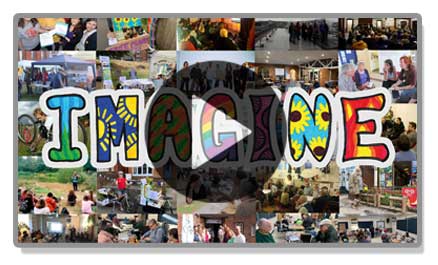
Imagine Southampton Film
What do you see when you imagine a better Southampton? Our new Imagine Southampton film harnesses the collective power of our community’s imagination to imagine a better future for our city and our communities.
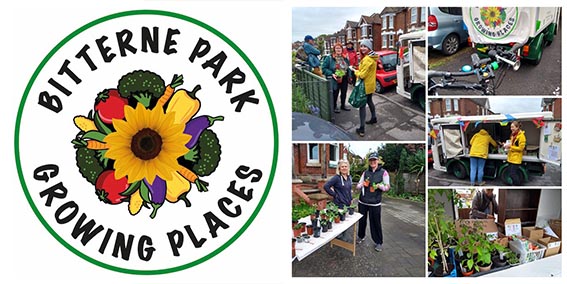
Bitterne Park Growing Places
We’re repeating our successful community food growing project again this year. Watch this space for news of what’s next this year.
Imagine 2030 using the Transition Time Machine
See what people saw in 2030 when they travelled into the future. A full write-up is available on our Blog.
Gardening projects
Our green gardening consultancy program continues for those within walking distance of Portswood. Feedback from recipients has been uniformly positive – why not see if our volunteer ecologist’s advice could help your garden support wildlife. Our retro-fit “rat proof composting” research also continues. If you have rats in the garden and are interested in a rat-proof compost collar, or if you live within walking distance of Portswood and would like a wildlife garden consultation see our Green Gardening Consultancy page.
Join a Southampton Group
If you’re looking to get involved with a local group there any many amazing environmental organisations around the city, some are listed here.